13 October 2014

Digital Games: Week 3

Hermione levels of organisation have been reached. The mysterious "timetable a le rigorous" has taken physical form and is now pinned up on my corkboard. It's even featuring scary weekly goals in yellow. And what a help this timetable has been! It has structured my workload and focus each day to a particular area of my studies. While following this timetable throughout the week, I have come to realise I have many more hours during the day that I originally planned. These hours have been filled with reading for the first assessment of the theory side of the course.


This first assessment has been the main focus of the week. Due in five weeks, we are to write an essay analysing a game through one of the concepts talked about in theory classes. For a while I've been clear on doing a write up on Gone Home, a game I not only enjoy, but find has strong links to semiotics as seen through urban exploration and psychogeography to propel a narrative and game world. I've only just recently decided on this particular topic after a week of researching papers and thickening a flipboard on Gone Home. After researching these papers and true to the goal of this week, I pinned my ideas on the corkboard to start structuring arguments. Designating Sunday for goal-oriented activities was not one of the best ideas as I realised I didn't have enough time to flick through and include most of the texts I wished to. This left me stressed on a Sunday afternoon as the diagram felt very last minute and I had no string to connect the ideas. On the other hand, next week's goal is less time consuming, leaving me more space to continue to expand the diagram (and get more string).


There were plenty of board games played this week including Ghost Stories, Shadows over Camelot, Resistance and Avalon. Ghost Stories was particularly difficult as it took our group two hours to read and understand the game rules. They used various diagrams meant to make it easier but gave no key to comprehend them. This left us scratching our heads as we played around with the positioning of game elements and player turns, trying to figure out how it was meant to be played. After a collective effort, we finally managed to understand it and decided to learn from the booklet: Never draw diagrams without keys, run through the game step by step, use key words repetitively, don't use lingo, ask yourself what questions your readers are going to be asking, start with a very clear and concise background of the game.


Shadows over Camelot, Resistance and Avalon are three very similar games in it's use of a traitor and sabotaging of quests. Camelot, by fleshing out the quests, concentrates the players focus on the cards and character actions as a way to identify traitors while Resistance and Avalon, through the lack of detail in the quests, focuses the players attention to the other players and our relationships among them. The game becomes much more psychological and a wildfire of distrusting glances were shot across the table. Interestingly, we played Resistance and Avalon one after the other meaning we could compare how small changes to rules could give different experiences. Resistance can be seen as a simpler version of Avalon. Through the lack of extensive rules and limitation of failures, players concentrate on just the psychological. Avalon is closer to Werewolf in that there is a psychic who knows who the traitors are and the traitors capability to kill the psychic. As there is no limitation to the amount of repeat quests, it means there is more time to figure out who the traitors are and quite often they are known by the end of the game. The implementation of the Werewolf mechanics balances this.


Less time was spent this week on MMF than I had wished. Our game design class revolved around messing about on the program and during it we completed a rain simulator. The rest of the class I played around creating a portal runner. I managed to get the scrolling and portals working when I ran against a bug that has proven quite difficult to solve. At one point I had various students sitting around my computer trying to lend a hand. We managed to figure out it was the coordinates of the mouse mixed with the scrolling that confused the computer. It was solved by replacing the control of the portals by using the keyboard but it meant that the game played much clunkier. This has been my MMF dilemma of the week.


There have been plenty of fun things happening through this week that reminded me of how much I love the vibe of this course. At the beginning of Steve Jackson's seminar, he grabbed four students and had them preform a magic trick; we discovered a little museum of old consoles in the secret room including the very first Atari and home computers; and finally, Tim and I invested and placed a very cool new poster to the games lab. If the games industry is as awesome as this place, I'm going to be a very happy game dev.

7 October 2014

Digital Games: Week 2

The second week of the course and we're slowly settling into a routine of balancing course requirements with all the amazing things that occur in London. Although, to be honest, most of the week was spent valiantly fighting a cold which I victoriously beat into submission. Either way, the classes go on and this week has been full of activity.

To begin with, another student and I have decided to set ourselves a rigorous work plan to get the most out of our course. We call it timetable a le rigorous. Aside from solo work such as reading and playing videogames, we are organising gatherings three times a week where we can: Play board games together. Create board games together using game design tasks. Practice MMF 2.5. All in the spirit of criticising, learning from and pushing each other to being the best game designers we possibly can.

In our game design class our task was to create a board game of a videogame in groups of four using crafts material and one hour of time. At the end of the hour, we'd have to have the rules written and watch other students play our creation. We chose to materialise Don't Starve. I won't get into the rules of the game here but we managed to get a working prototype ready by the end of the hour. The major lesson learned was the importance of clear rules and how to present them to the players. In ours we fractured them into two sets. In the rule sheet we started with an introduction: One sentence of what the goal of the game was followed by where the players should start and the general mechanics of the game. Specific rules of the objects you would find on the map were written on the object cards which you would pick up as you came across them. This meant that the students we gave the game to could instantly start playing after reading the first 5 sentences and indeed they did and understood it well. In this sense it was a success. As for balancing, it still needed a lot of polishing.


Steve Jackson started his talks from "Dice to Mice" where he illustrates the history of games. This week he took us on a journey from the Royal Game of Ur to Pokemon sprinkled with highly entertaining anecdotes of the early Games Workshop and dungeons and dragons scene in the UK. He really is a games design wizard with ridiculously awesome wisdom stats!

Theory touched on simulation and immersion. Aside from the debates in class which I won't go into here, we looked at the metaphorical simulation found in For the Records, a website working with psychologists and mental illness patients to bring representations of what having a certain mental condition is like. The game we played simulated what it felt to be bi-polar. After discussion we were asked to quickly describe how we would simulate a particular feeling through a game in our group tables. Someone suggested fear which we narrowed down to a specific fear such as the fear of heights. The setting would be a cliff and the features would be: 1. Loss of directional control as you get closer to the edge. At first you'd be able to control movement but as you got closer we'd invert the controls until finally no matter what you'd push would bring you a step closer to the edge. 2. Movement is slowed as you get closer. 3. Environmental sounds fade out. Internal sounds get louder (heartbeat and breathing). 4. When you get close to the edge the camera tilts up, concentrating on the drop. The reaction from Kelly: A shiver followed by a "I would not want to play that". I'm still conflicted on whether that is a good or a bad thing.


In the spirit of our timetable a le rigorous, Tim and I decided to challenge ourselves into creating a board game in 1 hour. The words our professor gave us were "aliens" and "cows". We set down to work however would often get distracted by the evil villain above roaming the board games room. An hour and a half later we were playing a game we had just created with more notches of valuable lessons learned. The game was all about cows (on a hexagonal grid field) who are tired of being the victims of alien abductions so they decide to fight back the only way they know how: eating, pooping, moving. The first concern was that as only two of us were making this game, we found it much harder to bounce back and forth ideas. We managed to overcome this by getting a prototype out half an hour in. After that point, ideas and refinements flowed much better and we got much further ahead in our design. We looked at previously played co-op games such as Castle Panic to inform how this game should work. Another interesting observation was how tightly the game mechanics and rules we had created were related to the aesthetics of the game. Halfway through the game creation we tried re-skinning it as something other than aliens abducting cows but didn't find another world in which the particular mechanics we had would make sense. This further reinforced my belief that in order to create innovative games the mechanics and the aesthetics of the game need to be co-dependent so that one cannot exist without the other.


New games played this week were limited as my board games arrived (Dixit and Gloom) and I was super excited to get everyone to play them. However I did get my hands on Dead of Winter when two professors came hunting for students to play the game with them. It reminded me a lot of Battlestar Galactica which is a game I enjoy a lot, except there was one thing I found Dead of Winter didn't do so well. It tries to create conflicting agendas between players however the co-op aspect of the game is so strong that we ignored our personal agendas for the survival of the group. More weight needs to be placed on the personal agenda by creating real consequences in the game. Another game I played was The Yawgh with two bachelor students in the games lab. It is an incredibly funny game that often had us in stitches though what was especially interesting to me was seeing the different play styles of each of us. One concentrated on the stats, another in keeping in character, while I found the most entertainment in the story as I created the town drunk who after the Yawgh becomes the town leader. It's a truly inspirational story.

30 September 2014

Digital Games: Week 1

The four rules of the Digital Games MA at Brunel:

1. Do the assigned reading.
2. Get to know the people on your course.
3. Learn the MMF 2.5 software.
4. Play lots and lots of games!

This sums up the first week of games theory and design, a course where booklets are decorated with Scott Pilgrim characters, students have access to all the consoles imaginable and professors quote Star Wars on a regular basis. As a challenge to myself as well as for record keeping, I shall be attempting to record the progress of the course. It has proven to be a very intense program with every day being worth of an entire blog post. To make things easier I will briefly comment on various activities then concentrate on one particular detailed high-light for the week.


Most of this week was spent discovering new games and getting to know classmates. Naturally, we did this over board games which included Once Upon a Time, Castle Panic, Talisman, Jenga, Resistance and a racing board game that had us all in laughing fits at how slow the game was. In the London tube I horrified the english by playing the augmented reality game Face Raiders on a friend's nintendo and learned my lesson on gaming and social conventions. On my own I've played Don't Starve, Prison Architect, Pathogen and Threes with Don't Starve quickly becoming a personal favourite. A lot of these were played on the way to EGX in London where we discovered gems like Mushroom 11, Lumino City and Never Alone. These personal discoveries at EGX are magnificent games that deserve their own blog post but that falls outside the scope of this particular post.

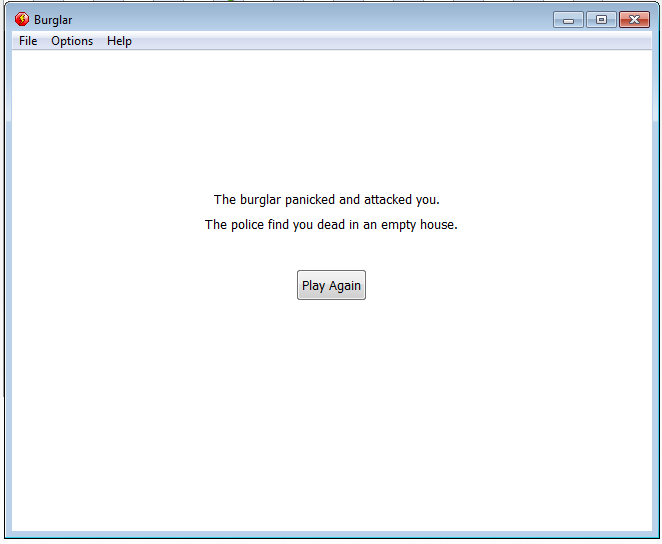
Just an hour into the course and we were already designing and pitching game concepts on the spot. Among a team of four and the key words "burglary" and "fear", we came up with the idea of creating an oculus game all in 5 minutes. You play a mansion owner on a dark, stormy night who's home has been broken into by a burglar. The goal of the game is to get to the phone without either coming across the burglar or loosing all your possessions. While you look at a possession, it is safe from the burglar. Look away though and the next time you look back, it might be gone.


After the class, Tim and I decided to try and make a simplification of the game on MMF 2.5, mainly to learn how to use the program. First I drew a sketch of a top-down, Monaco-styled game which Tim set up to start creating on the software. I decided that the both of us working on creating the same mechanic would be redundant so I began experimenting with various tutorials to get the hang of MMF. One of the first things learned was frame scrolling, followed by having an object follow the mouse. By making that object be a large black image with a transparent centre, I managed to make it look like I was shining a flashlight onto a surface.


At this point is when I realised I had worked out a first-person mechanic for the burglar game. I created a burglar icon that would randomly move across the play area. When it came in contact with your cursor, the game would end. When the burglar was near your mouse, you'd hear footsteps. Then I created a series of "valuables" that would randomly scatter at the beginning of the game. Whenever the burglar came in contact with one, it would disappear and you would loose a point. Finally, I created a telephone that would randomly spawn on the play area. When you find and click on it, you'd ring the police and win.


It took me an afternoon and half the night to make it, most of which was figuring how to do things and the rest refining the behaviour of the burglar and the collision detection to create better gaming experiences. For example, the burglar slows when they are near you so there is more skill involved in avoiding them. Also, I've made the collision area of the cursor smaller so there might be instances of panic where you catch a glimpse of the burglar before they, or you, escape.


Overall it was quite an entertaining game to create especially as it gave me the opportunity to learn from students in other years during the process, whether it was playing their game demos or asking for technical help. The computer lab at this university houses a very creative community and I can definitely see myself spending most of my time here.

A suggestion that was put forward to me by a generous game player was the thought that controlling a character with the keyboard and the direction of its flashlight with the mouse would make the game more coherent. It would feel less like "shining a light from the cieling onto a floor". I found myself agreeing with him as this also means that I could play with the speed of the character and therefore the feel of the context. Perhaps this should be a project for next week.

13 March 2014

On Writing a Personal Statement

Recently my inbox has been filled with friends panicking about their personal statements. While I enjoy proofreading, I thought maybe publishing my own writing process might be of some use to somebody. The application was for a masters course in Brunel University but the steps can be applied for other degrees. I got an offer three weeks after my application so I must have been doing something right.

Step 1 Jot down all the things you've done these past few years that are important to you along with what you learned from them. Don't worry about whether or not it fits the course at this point. This should be a mix of accomplishments you're proud of and would eagerly show off given the chance. I wrote mine in a spider diagram to see how all of the activities linked together.


Step 2 Write down the course requirements and aims found on the university website and highlight any key words. Try to analyse exactly what it is they are looking for. On mine for example I identified four main categories: research skills, analytical skills, innovation and future plans.


Step 3 Go back to your diagram from step 1 and identify how your recent activity satisfies their course requirements. On mine I gave a colour to each of the categories (research, analytical, innovation, future) and put a dot of that colour to the things I've done that prove these skills. This is also a good way to see if the course is actually right for you. If it is, the requirements will fit your past experience like a glove.

Step 4 Organise your web diagram into bullet points using the words highlighted from step 2. This is the bare bones of your personal statement, just the core concepts you want to message across. Colour code these as well as it will help you identify which bullet points are important and which are superfluous.


Step 5 Research the staff that are going to be teaching you. What do they have to say on the course? What is their area of expertise? Write down any books or papers they have written and read them! If this is the right course you will surely find quite a few that are interesting to you.


Step 6 Start writing your statement. Don't think about how it sounds just yet, just link together the bullet points from step 4 into something coherent. Once you're done with that go back and start editing. Put yourself in the shoes of the university. If you've done step 5, this shouldn't be too hard. Keep referring back to the course requirements if you get stuck.

Step 7 Show your statement to people. The more the better though it helps a lot if you have someone who is experienced either in proofreading or the industry. For example for my application into a games course, I asked my contacts in the games industry to read it. Keep an open mind and remember to weigh other peoples edits against your own core concepts.

Step 8 Put the statement away. Go do a roadtrip, play videogames non-stop for an entire weekend, hang out at the pub, whatever you do to distract yourself from the daunting thought that is your uncertain future. Once you've had enough beers, beaten enough bosses or gotten tired of travelling, open up your statement again and read it. Do whatever changes you feel you have to do until you are happy with how it sounds and show it again to your contacts.

Step 9 Read your statement again. Does it go above and beyond answering your universities questions? Does it make you sound like you can take on their course? Does it make you feel proud and accomplished? Do your proofreaders agree? Then congratulations, you are ready to send off your personal statement.

Hope I was of some help and good luck!

12 March 2014

Misc Doodles and Wisdom of Architecture School

I recently received the news that I got into Brunel University to study my masters in Digital Games: Theory and Design. Surely, it is no wonder I am beyond excited to begin!

Thinking about going back to university I remembered all those moleskins I filled during my architecture course at the Canterbury School of Architecture, UCA. Aside from all the building sketches and perspective lines, movement studies and plans, I'd often sketch things that were not exactly architecture, but were not exactly anything else either. Simply knowledge and experiences collected during the three years in Canterbury. Here are a few.

But the truly dearest is the back page of the moleskin, where a few friends decided it would be great to leave their own signatures.


Perhaps its wishful thinking but I like to think I'm not exactly leaving architecture. Having done three years of it, it has heavily shaped the way I approach game design and I will continue to sketch, analyse and create from the architecture around me.

4 November 2013

Adventuring through Morocco

“The world is a book and those who do not travel read only one page.”  - Augustine of Hippo

When I was a pre-teen my parents would talk about how privileged my sister and I were for living in so many European countries. My parents didn't leave Spain until they were 18. I complained that I would turn 18 and I would have never left Europe. I am 21 now and tomorrow I will be flying to Marrakech, Morocco, Africa.


If you would like to follow my travels, you can do so here: travelthestory.blogspot.com

18 October 2013

Passages at the Ateneo of Madrid

Sculptures by Ulla Haga. Paintings by Erica Fromme
Photographed by me.


Calderón de la Barca and Velázquez believed that artists were intellectuals to be treated with respect. After three days of socialising with magnificently inspirational artist in Madrid, I cannot see how anyone could think any other way.

I originally went to the capital as moral support for my mother, Rosa Mascarell-Dauder, who co-curated with Trevisan International an exhibition at the heart of Madrid. Artists from all over the world had sent boxes of paintings and sculptures to her and my father's apartment to the point where navigating the living-room was a task for Theseus and Ariadne. A few transports to the exhibition hall later and I was soon talked into being the event's photographer and hired as a translator for next day's tour of Madrid.

Rosa (Mother), Rosario, Paola and Borja (Father) unpacking artwork at the venue.

After days of unpacking and whitewashing and fixing lights, everything culminated with a congregation of great thinkers at the exhibition opening. Essays could be written on how inspirational not just the minds behind the artworks were but the people standing behind the artists too. I will not attempt to condense the genious and say, if you are in Madrid, swing by the Ateneo and contemplate their magnificent artwork.

The artists.

As for the tour of Madrid, did you know the Calle del León is called that way because a man used to keep a lion on that street as an exotic pet and let people see it for some coins?