17 November 2014

Digital Games: Week 8

Reading week (which consisted of more writing than reading) is finished, the theory assignment has been handed in and I've taken the first three days of this week to shut myself in my room with takeaway and play The Witcher 2. However what was meant to be relaxation soon turned into a semiotic analysis of "Polishness". Theory classes are officially following me everywhere and I love it!

I've recently gotten into the habit of explaining each weeks theory to non-game design friends which has really helped solidify the concepts as well as see its applications beyond the scope of games. This week's field was rhetorics where we practiced in class by analysing a series of game covers. Outside of the class, a friend made me analyse a cover for a TV series I had not seen. Using rhetorics and semiotics I was able to guess the characters and their relationships. It was good practice and proved how important the image is along with the messages it conveys.


This weekend was filled with games in London. The first was an unexpected turn through a wander in Shoreditch where we stumbled into #conkerking, where you held wallnuts on strings and tried to destroy each other. Neither myself nor my partner knew this game but were later told it's a traditional game in the UK. Found in a corner off the side of Brick Lane it was a pleasant surprise that had a flow of people lighting up at the chance of playing games together. Sadly, I lost horribly at this game but nevertheless, it had both of us laughing.


Near Bethnal Green, comedians McNeil and Pamphilon performed their sketches with 8-bit retro games. With the audience, we'd play a series of games such as Mario, Dr. Robotnik's Mean Bean Machine, ClayFighter and Aaaah For the Awesome. We even got to see Videogame Guy play Mario with his hands and Sonic 2 with his feet at the same time and beat both in under 1 minute. Impressive!


In design classes we practiced a bit of MMF2.5. It has been something I have been neglecting these past weeks due to essay work so this class was a good reminder this is something I need to keep practicing. We explored alterable values by creating a system that would recognize if the player is wearing a hat or not and then upgrade the hat.


There was some trial and error in the logic used to make the character wear the hat. I started out with: upon player collision with the hat, the hat would destroy itself and the character animation would change to one with him wearing a hat. After some deliberation, I discovered a more practical way which was: upon player collision with the hat, change the alterable value to 1. When the alterable value is equal to 1, the hat position is equal to 0,5 relative to the position of the player. This worked much better and meant that the player could take off the hat and upgrade it into two spiffy new designs.


1 November 2014

Digital Games: Weeks 5+6

There have been some key advancements over these two weeks. The first news is I have been elected as student representative, meaning more invulcration with the course, its professors and fellow students, an activity I've been absolutely loving. Secondly, myself and another student have organised and started conducting a weekly theory text discussion where we build upon our understandings of each weeks readings. Other students have also organised technical sessions where we teach each other Unity3D and Unreal Engine. After a very chaotic and busy week 5, a clear structure is beginning to emerge.


Most of week five was overshadowed by a very long yet exciting weekend working at the MCM Expo London Comic Con. I assisted old university friend and creator of Deathbulge, Dan, managing his stall, diffusing his comics online and at the event, accounting work of his sales and general support.


In between handing out business cards and jotting down numbers, I played a few tablet and analogue games at the Esdevium and Indie Go Game stalls. One highlight was Dobble, a very entertaining and quick paced card game with various forms of play, ending with myself and a stranger screaming at each other and laughing at the ruckus we were causing. The other game was one who's name escapes me now, which I played while discussing the creation with the programmer. It features a series of hilarious mini games set in the wild west all centered around the core mechanic of spinning the barrel of a gun. With it you can shoot coins, dance, banish bad guys, jump across cliffs, all with the funniest death animations that made the inevitable failure incredibly fun.


Comic Con ended with Dan and myself going for a much needed celebratory dinner and pint with Dave and Rob of Cyanide & Happiness. It was Dan and mine's first time working at a convention, let alone one with over 110,000 attendees. The entire experience ran smoothly and it's time to confess, I much prefer witnessing the geeky goodness from the content creator side of the stall, rather than as merely a consumer. Standing at a game booth, beaming enthusiasm and engagement at visitors while analytically observing their play is an activity that feels natural to me and I cannot wait to be doing this with my own content.


Back on the course, our weekly game design classes have concentrated on art, from communication to creation. In week 5 we practiced free-hand drawing where we drew objects, our hand and a classmate. There was very little time for detail but enough to practice some techniques. In the 6th week, we practiced world and character building in a team of four. We used a random concept generator to come up with a game idea then moved on to describe and develop it. Our random concept was : "An adventure game where you banish unicorns to warp spacetime." The description we came up with of this world along with the mood board can be found here. In the last few minutes of the class, using a wacomb tablet and photoshop, I sketched some ideas for the cultist character of this world.


We wanted to communicate a tribal cyberpunk cult, a blending that proved challenging. There are quite a few things I would change to the character I had at the end of the class. For example, the side horns, while quite aggressive, feel too goat-like. These cultist are sacrificing unicorns and wearing their skulls therefore the anatomy of it needs to be appropriate. The blue lines in the drawing were added after a brief discussion with our professor on how to communicate cyberpunk. While it's true that lights are the most signifying of cyberpunk, it feels inappropriate to that world. Instead, I would like to try drawing more inspiration from Italian futurism or Lebbeus Woods. My final problem is with the dagger. A good communicator of this high-tech future is in their tools. With more time I would have given it it's own design analysis.


As a side course, a group of us have started teaching each other Unity 3D. This week, Roman guided us through creating a simple popcorn making environment. While I'm already familiar with the program, it was nice to refresh the memory and pick up more on the programming side of Unity 3D. Roman did an excellent job teaching our group and I am definitely looking forward to more meetups like this one.


These two weeks theory topics, film and literature theory, have been especially amazing and relevant to my essay but I shall not be talking about it here. Just know there are hopefully great things lying in the future and project ideas that have bounced out of theory lessons which have gotten me very enthusiastic. Every day I'm engaged in something to do with games. It's fantastic! This course really fits me like a glove.

20 October 2014

Digital Games: Week 4


This week has been fairly hectic due to personal reasons so when I found myself not sitting in front of papers (as was often the case this week) I'd catch myself daydreaming about my theory essay. The topic has changed to better fit the brief requirements and our lecturer was a real help when it came to sorting out the tangle of theories inside my head. Most of them are now sticked up on what I've started calling my detective wall. The topic (as approved by Kelly): The role of spatiality in creating immersion in digital games. The real difficulty is going to be fitting this huge topic into 1500 words.


In our games design class we practiced pitching a game in front of the class. Coming from an architecture background, there wasn't anything particularly new apart from the context. (And I do have to say, pitching a game so far seems much easier than pitching a building. Let's hope it continues that way.) We were asked to grab two games, mesh them together into a new one and pitch it to the class. In our team of three we created a co-op tetris with portals called Tortle! With an hour of time, some power point and photoshop skills we visualised some concepts of the game.

Continuing from the rain generator in MMF from last week, I decided to try and apply the code learned from that demo to a version of Tortle. At first I started with a random generator of tetris blocks and a player that must get from one side of the screen to the other. As I was working on the events editor a second year pointed out a useful way to group objects together which saved me countless lines of code. It took me a few hours to get the blocks to fall the way I wished to (as opposed to a very funny but useless pile of tetris blocks) and it is still far from being an engaging game. Adding sub-goals and skills might change that.


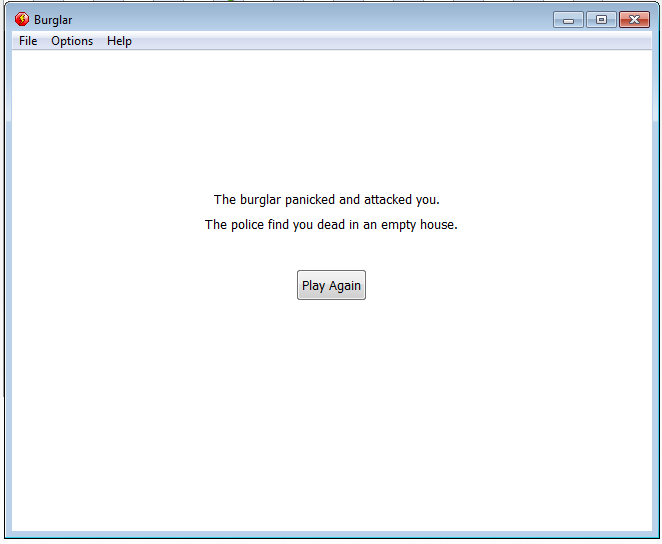
But when it comes to MMF I'd like to instead point towards the Burglar game from week 1. I have created a second version of the game. It's the same game but in third person. The code had to change quite a bit but as I play each version, I'm wondering just how different the games are as an experience. You can download and play both versions here. If you have any thoughts, I'd love to hear them!


Lastly, this Saturday was spent in Canterbury, the town where I did my undergraduate in architecture. Three years ago I used to go to the pub once a month to listen to techie talks and network with local innovators at Digibury. Since then the event has grown and this year it was held at the Gulbernikan in Kent University, hosted by Robin Ince of The Infinite Monkey Cage fame. A quick run down of what happened can be found on my twitter though what I would love to highlight is how in Howard Griffin's talk on architectural visualisation, he used an Oculus Rift to walk people through Canterbury's Abbey. Those that have been following my blog since my second year in architecture school will understand my excitement at seeing architecture schools finally catching up with technology. All my best wishes to the course professors at Kent University! May you always stay innovative.

Two Moleskins, Six Months of Travel, Fourteen Countries.

For six months I travelled around eastern Europe and beyond, solidifying what I saw as sketches.

A lot of them are unfinished, raw, messy and far from the perfection they taught us in architecture school. I only showed these to people I felt I could trust until I realised all of those unfinished lines, mistaken perspectives and accidental strokes are part of the essence of travelling. When moving across Europe, all I could afford to bring was a moleskin, a pen and the time in between buses, conversations and pulsating activity. No pencils, no rulers, no corrections. Just the very personal bleeding of experiences onto tiny A6 paper.

These are not all the drawings I did as there are plenty more where these came from but they are some, unedited, uncropped interlaced with all the thoughts and notes that crossed my mind.


I moved back to my grandparent's for a month in the mountainside of la Safor, Spain, to replenish my energies before starting my masters course. Here I started a second moleskin prefaced by the words:

"The best thing about coming back home after a long adventurous journey is that everything old is new again. Every building and every meal has an identity of it's own that I was blind to before. Views of the land is riddled in history and walks through the streets are filled with novelty. Every granny sitting by her porch, every word uttered in Valenciano, every sunbath and every village supper is filled with meaning."


 But it doesn't stop there. This second moleskin is still growing with more drawings of London streets and commuters on the tube where half stroked faces as people step off of trains and unfinished shards as the crowd moves me along become a part of the buzzing character of cities on paper.

13 October 2014

Digital Games: Week 3

Hermione levels of organisation have been reached. The mysterious "timetable a le rigorous" has taken physical form and is now pinned up on my corkboard. It's even featuring scary weekly goals in yellow. And what a help this timetable has been! It has structured my workload and focus each day to a particular area of my studies. While following this timetable throughout the week, I have come to realise I have many more hours during the day that I originally planned. These hours have been filled with reading for the first assessment of the theory side of the course.


This first assessment has been the main focus of the week. Due in five weeks, we are to write an essay analysing a game through one of the concepts talked about in theory classes. For a while I've been clear on doing a write up on Gone Home, a game I not only enjoy, but find has strong links to semiotics as seen through urban exploration and psychogeography to propel a narrative and game world. I've only just recently decided on this particular topic after a week of researching papers and thickening a flipboard on Gone Home. After researching these papers and true to the goal of this week, I pinned my ideas on the corkboard to start structuring arguments. Designating Sunday for goal-oriented activities was not one of the best ideas as I realised I didn't have enough time to flick through and include most of the texts I wished to. This left me stressed on a Sunday afternoon as the diagram felt very last minute and I had no string to connect the ideas. On the other hand, next week's goal is less time consuming, leaving me more space to continue to expand the diagram (and get more string).


There were plenty of board games played this week including Ghost Stories, Shadows over Camelot, Resistance and Avalon. Ghost Stories was particularly difficult as it took our group two hours to read and understand the game rules. They used various diagrams meant to make it easier but gave no key to comprehend them. This left us scratching our heads as we played around with the positioning of game elements and player turns, trying to figure out how it was meant to be played. After a collective effort, we finally managed to understand it and decided to learn from the booklet: Never draw diagrams without keys, run through the game step by step, use key words repetitively, don't use lingo, ask yourself what questions your readers are going to be asking, start with a very clear and concise background of the game.


Shadows over Camelot, Resistance and Avalon are three very similar games in it's use of a traitor and sabotaging of quests. Camelot, by fleshing out the quests, concentrates the players focus on the cards and character actions as a way to identify traitors while Resistance and Avalon, through the lack of detail in the quests, focuses the players attention to the other players and our relationships among them. The game becomes much more psychological and a wildfire of distrusting glances were shot across the table. Interestingly, we played Resistance and Avalon one after the other meaning we could compare how small changes to rules could give different experiences. Resistance can be seen as a simpler version of Avalon. Through the lack of extensive rules and limitation of failures, players concentrate on just the psychological. Avalon is closer to Werewolf in that there is a psychic who knows who the traitors are and the traitors capability to kill the psychic. As there is no limitation to the amount of repeat quests, it means there is more time to figure out who the traitors are and quite often they are known by the end of the game. The implementation of the Werewolf mechanics balances this.


Less time was spent this week on MMF than I had wished. Our game design class revolved around messing about on the program and during it we completed a rain simulator. The rest of the class I played around creating a portal runner. I managed to get the scrolling and portals working when I ran against a bug that has proven quite difficult to solve. At one point I had various students sitting around my computer trying to lend a hand. We managed to figure out it was the coordinates of the mouse mixed with the scrolling that confused the computer. It was solved by replacing the control of the portals by using the keyboard but it meant that the game played much clunkier. This has been my MMF dilemma of the week.


There have been plenty of fun things happening through this week that reminded me of how much I love the vibe of this course. At the beginning of Steve Jackson's seminar, he grabbed four students and had them preform a magic trick; we discovered a little museum of old consoles in the secret room including the very first Atari and home computers; and finally, Tim and I invested and placed a very cool new poster to the games lab. If the games industry is as awesome as this place, I'm going to be a very happy game dev.

7 October 2014

Digital Games: Week 2

The second week of the course and we're slowly settling into a routine of balancing course requirements with all the amazing things that occur in London. Although, to be honest, most of the week was spent valiantly fighting a cold which I victoriously beat into submission. Either way, the classes go on and this week has been full of activity.

To begin with, another student and I have decided to set ourselves a rigorous work plan to get the most out of our course. We call it timetable a le rigorous. Aside from solo work such as reading and playing videogames, we are organising gatherings three times a week where we can: Play board games together. Create board games together using game design tasks. Practice MMF 2.5. All in the spirit of criticising, learning from and pushing each other to being the best game designers we possibly can.

In our game design class our task was to create a board game of a videogame in groups of four using crafts material and one hour of time. At the end of the hour, we'd have to have the rules written and watch other students play our creation. We chose to materialise Don't Starve. I won't get into the rules of the game here but we managed to get a working prototype ready by the end of the hour. The major lesson learned was the importance of clear rules and how to present them to the players. In ours we fractured them into two sets. In the rule sheet we started with an introduction: One sentence of what the goal of the game was followed by where the players should start and the general mechanics of the game. Specific rules of the objects you would find on the map were written on the object cards which you would pick up as you came across them. This meant that the students we gave the game to could instantly start playing after reading the first 5 sentences and indeed they did and understood it well. In this sense it was a success. As for balancing, it still needed a lot of polishing.


Steve Jackson started his talks from "Dice to Mice" where he illustrates the history of games. This week he took us on a journey from the Royal Game of Ur to Pokemon sprinkled with highly entertaining anecdotes of the early Games Workshop and dungeons and dragons scene in the UK. He really is a games design wizard with ridiculously awesome wisdom stats!

Theory touched on simulation and immersion. Aside from the debates in class which I won't go into here, we looked at the metaphorical simulation found in For the Records, a website working with psychologists and mental illness patients to bring representations of what having a certain mental condition is like. The game we played simulated what it felt to be bi-polar. After discussion we were asked to quickly describe how we would simulate a particular feeling through a game in our group tables. Someone suggested fear which we narrowed down to a specific fear such as the fear of heights. The setting would be a cliff and the features would be: 1. Loss of directional control as you get closer to the edge. At first you'd be able to control movement but as you got closer we'd invert the controls until finally no matter what you'd push would bring you a step closer to the edge. 2. Movement is slowed as you get closer. 3. Environmental sounds fade out. Internal sounds get louder (heartbeat and breathing). 4. When you get close to the edge the camera tilts up, concentrating on the drop. The reaction from Kelly: A shiver followed by a "I would not want to play that". I'm still conflicted on whether that is a good or a bad thing.


In the spirit of our timetable a le rigorous, Tim and I decided to challenge ourselves into creating a board game in 1 hour. The words our professor gave us were "aliens" and "cows". We set down to work however would often get distracted by the evil villain above roaming the board games room. An hour and a half later we were playing a game we had just created with more notches of valuable lessons learned. The game was all about cows (on a hexagonal grid field) who are tired of being the victims of alien abductions so they decide to fight back the only way they know how: eating, pooping, moving. The first concern was that as only two of us were making this game, we found it much harder to bounce back and forth ideas. We managed to overcome this by getting a prototype out half an hour in. After that point, ideas and refinements flowed much better and we got much further ahead in our design. We looked at previously played co-op games such as Castle Panic to inform how this game should work. Another interesting observation was how tightly the game mechanics and rules we had created were related to the aesthetics of the game. Halfway through the game creation we tried re-skinning it as something other than aliens abducting cows but didn't find another world in which the particular mechanics we had would make sense. This further reinforced my belief that in order to create innovative games the mechanics and the aesthetics of the game need to be co-dependent so that one cannot exist without the other.


New games played this week were limited as my board games arrived (Dixit and Gloom) and I was super excited to get everyone to play them. However I did get my hands on Dead of Winter when two professors came hunting for students to play the game with them. It reminded me a lot of Battlestar Galactica which is a game I enjoy a lot, except there was one thing I found Dead of Winter didn't do so well. It tries to create conflicting agendas between players however the co-op aspect of the game is so strong that we ignored our personal agendas for the survival of the group. More weight needs to be placed on the personal agenda by creating real consequences in the game. Another game I played was The Yawgh with two bachelor students in the games lab. It is an incredibly funny game that often had us in stitches though what was especially interesting to me was seeing the different play styles of each of us. One concentrated on the stats, another in keeping in character, while I found the most entertainment in the story as I created the town drunk who after the Yawgh becomes the town leader. It's a truly inspirational story.

30 September 2014

Digital Games: Week 1

The four rules of the Digital Games MA at Brunel:

1. Do the assigned reading.
2. Get to know the people on your course.
3. Learn the MMF 2.5 software.
4. Play lots and lots of games!

This sums up the first week of games theory and design, a course where booklets are decorated with Scott Pilgrim characters, students have access to all the consoles imaginable and professors quote Star Wars on a regular basis. As a challenge to myself as well as for record keeping, I shall be attempting to record the progress of the course. It has proven to be a very intense program with every day being worth of an entire blog post. To make things easier I will briefly comment on various activities then concentrate on one particular detailed high-light for the week.


Most of this week was spent discovering new games and getting to know classmates. Naturally, we did this over board games which included Once Upon a Time, Castle Panic, Talisman, Jenga, Resistance and a racing board game that had us all in laughing fits at how slow the game was. In the London tube I horrified the english by playing the augmented reality game Face Raiders on a friend's nintendo and learned my lesson on gaming and social conventions. On my own I've played Don't Starve, Prison Architect, Pathogen and Threes with Don't Starve quickly becoming a personal favourite. A lot of these were played on the way to EGX in London where we discovered gems like Mushroom 11, Lumino City and Never Alone. These personal discoveries at EGX are magnificent games that deserve their own blog post but that falls outside the scope of this particular post.

Just an hour into the course and we were already designing and pitching game concepts on the spot. Among a team of four and the key words "burglary" and "fear", we came up with the idea of creating an oculus game all in 5 minutes. You play a mansion owner on a dark, stormy night who's home has been broken into by a burglar. The goal of the game is to get to the phone without either coming across the burglar or loosing all your possessions. While you look at a possession, it is safe from the burglar. Look away though and the next time you look back, it might be gone.


After the class, Tim and I decided to try and make a simplification of the game on MMF 2.5, mainly to learn how to use the program. First I drew a sketch of a top-down, Monaco-styled game which Tim set up to start creating on the software. I decided that the both of us working on creating the same mechanic would be redundant so I began experimenting with various tutorials to get the hang of MMF. One of the first things learned was frame scrolling, followed by having an object follow the mouse. By making that object be a large black image with a transparent centre, I managed to make it look like I was shining a flashlight onto a surface.


At this point is when I realised I had worked out a first-person mechanic for the burglar game. I created a burglar icon that would randomly move across the play area. When it came in contact with your cursor, the game would end. When the burglar was near your mouse, you'd hear footsteps. Then I created a series of "valuables" that would randomly scatter at the beginning of the game. Whenever the burglar came in contact with one, it would disappear and you would loose a point. Finally, I created a telephone that would randomly spawn on the play area. When you find and click on it, you'd ring the police and win.


It took me an afternoon and half the night to make it, most of which was figuring how to do things and the rest refining the behaviour of the burglar and the collision detection to create better gaming experiences. For example, the burglar slows when they are near you so there is more skill involved in avoiding them. Also, I've made the collision area of the cursor smaller so there might be instances of panic where you catch a glimpse of the burglar before they, or you, escape.


Overall it was quite an entertaining game to create especially as it gave me the opportunity to learn from students in other years during the process, whether it was playing their game demos or asking for technical help. The computer lab at this university houses a very creative community and I can definitely see myself spending most of my time here.

A suggestion that was put forward to me by a generous game player was the thought that controlling a character with the keyboard and the direction of its flashlight with the mouse would make the game more coherent. It would feel less like "shining a light from the cieling onto a floor". I found myself agreeing with him as this also means that I could play with the speed of the character and therefore the feel of the context. Perhaps this should be a project for next week.